
Integer vs Real Number
Integer vs Real Number: Comparative Analysis for Z Calculation
Numbers form the backbone of all computed results, whether in mathematical science, engineering, financial modeling, or daily life. In many numerical systems, the distinction between integer vs real number is essential, as Z integers represent fixed, separate values while real numbers extend across an unbroken, detailed range.
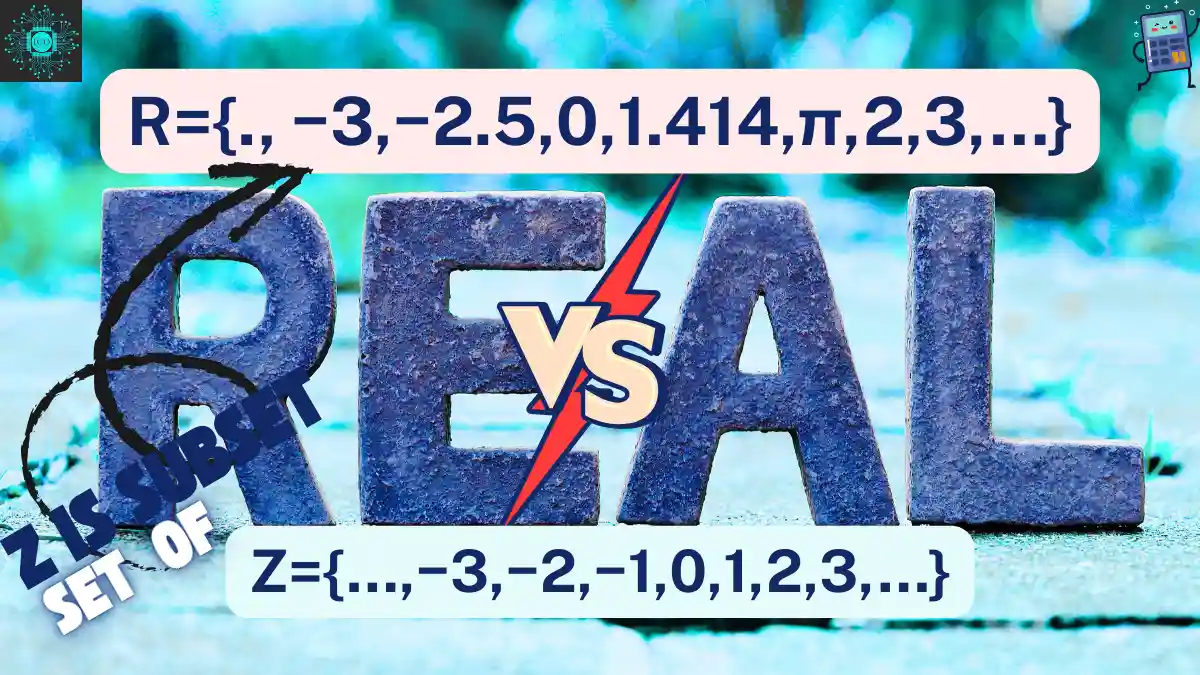
Understanding the core differences, uses, and real-world roles of integer vs real number helps in choosing the correct type for any computation. Integers are denoted by Z. In simple words, Real numbers are all in one, but integers no have none than whole. lets look at the example calculating tools for integer vs real number like as under;


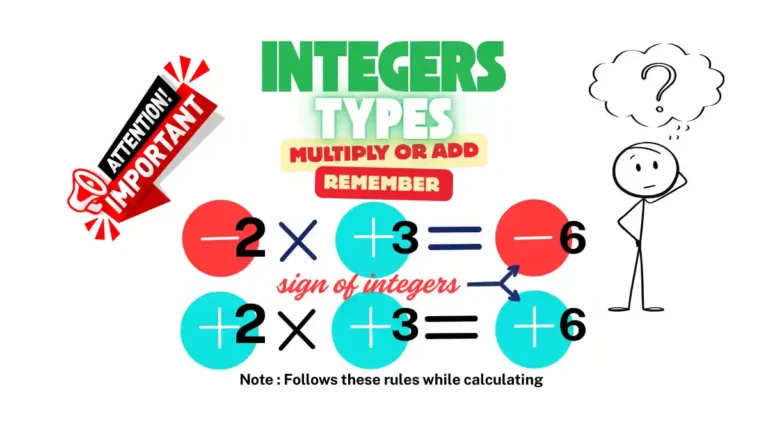
An integer equation is an equation in which the solution must be in integers, meaning a whole number without fractions or decimals. For example, in (5x – 4 = 11), the solution (x = 3) is an integer. 3 Integer “Z” is +ve whole numbers.
The integer value range is theoretically infinite in mathematics but limited in computers depending on data type—for example, a 32-bit signed integer ranges from (-2,147,483,648) to (2,147,483,647). Integer equations are widely used in counting, discrete mathematics, and computer science.
1. Key things about Integer vs real number
| Feature | Integers are represented by Z | Real No are represented by ℝ |
| Value Type | Only whole numbers +/- eg Quotien of -6/2=-3 is whole negative no | Includes decimals, fractions, and irrational numbers example Qutient of 5/4=1.25 is not full no |
| Continuity | Like growth of population is counted on whole no eg Pakistan has 25million | For example population density per square of pakistan is in range of 330 to 331 or simply 316.13/ square Kilometer |
| Precision | Total no of students in class is 34. | Average weight of studen 7 kg |
| Calculation Scope | eg in Bank Money counting calculator gives result no of currency notes, no coins, as whole. | Architecture measures size, are in highly precision eg A size of bolt is 25.5mm2 |
Insight: Integer is simpler and easier to handle, which is why they are taught in schools, while real no are essential for lifelong applications requiring accuracy.
2. Usage of Integer vs Real Number in Quantitative Science
| Field | Integer Z | Real Number R | How to use |
| Mathematics | Counting objects, labeling sequences, factorials (n!) | Solving equations with fractions, decimals, or irrational numbers | Use them for whole-no problems; real-numbers for precision. |
| Science | Counting particles, experimental trials, atomic numbers | Measuring mass, velocity, temperature, concentration | “R” give most precised computation; while “Z” count discrete calculus. |
| Engineering | Number of bolts, floors, machines, circuit components | Dimensions, tolerances, forces, voltages | |
| Finance | Counting currency notes, coins | Profits and loss in decimal | Count currency notes on money-counters and profit by Scientific-calcualator |
| Daily Life | Counting items, scoring, numbering floors or rooms | Measuring height, weight, distance, temperature | eg Calculation between days |
| Computer Science | Indexing arrays, loop iterations | Floating-point assessment, simulations | “Z” are for discrete operations; “R” handle continuous data |
3. School vs Life Perspective
- Integers: Integer 6th grade math, because they are easy to understand and useful for counting, basic arithmetic, and foundational number concept.
- “R”: Applied throughout life, because real-numbers allow precise measurements, estimations, and representation of fractions and irrational quantities.
In short: integers form the foundation of learning, while real-numbers guide practical, real-world quantification for a lifetime.
4. Tips
- When to use integers:
- Counting whole objects or units
- Indexing, labeling, or ranking items
- Problems where fractions or decimals are unnecessary
- When to use real No:
- Measuring distances, weight, or temperature
- Performing quantification requiring decimals or fractions
- Solving scientific, engineering, or financial problems where precision is key
5. Conclusion
Although both are essential, yet the comparison of integer vs real number clearly shows that their unique differences and applications make them suitable for distinct purposes.
- Integer ℤ: Unique for whole-unit counting and discrete figuring; studied primarily at school level.
- Real No: Unique for continuous, precise measurements and assessments; used throughout life in practic al applications.
Use “Z” for simplicity and counting, and real “R” whenever precision, decimals, or fractions are needed. Understanding this distinction ensures accurate and efficient calculations in mathematics, science, engineering, finance, and everyday life.